Automotive & Assembly
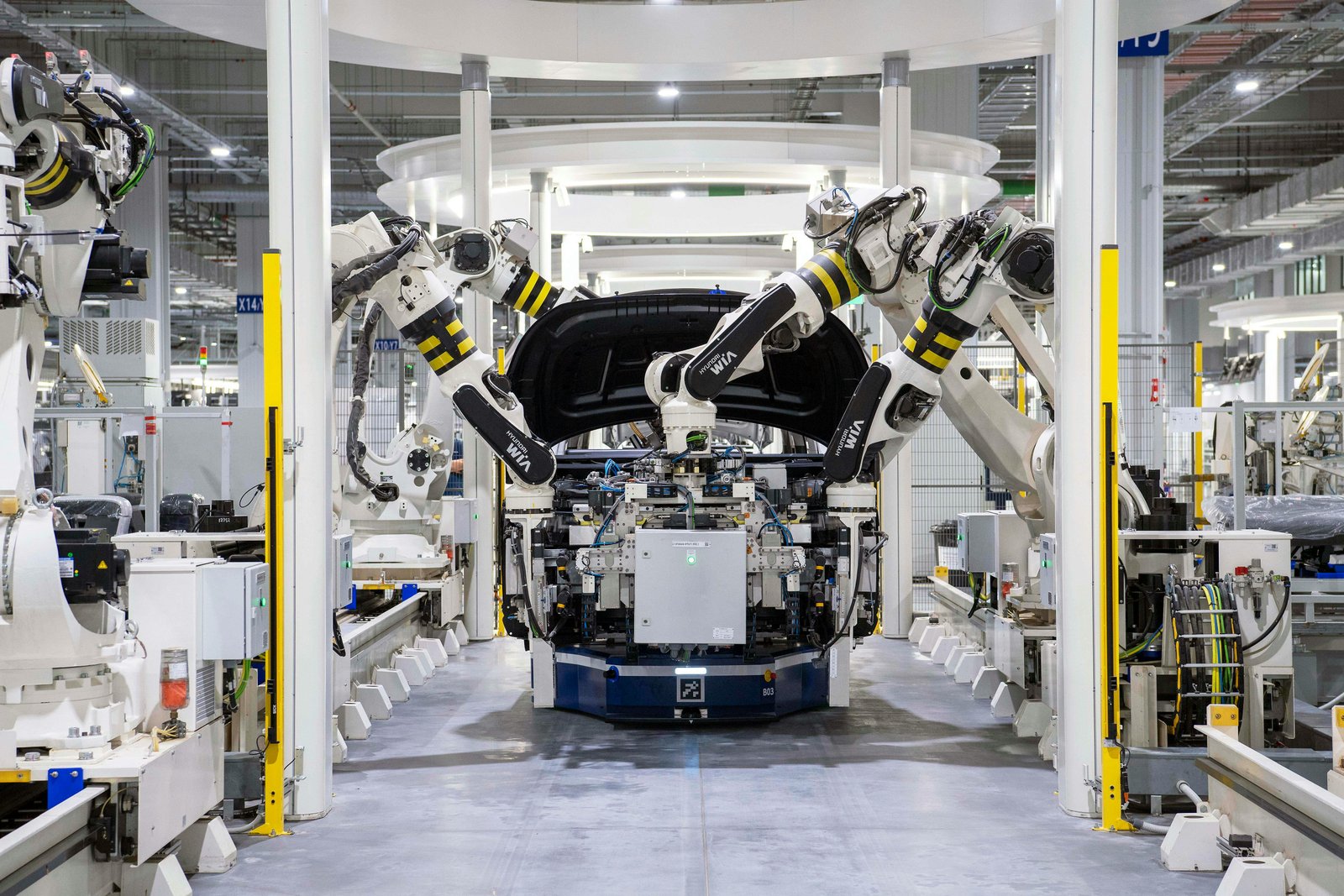
Weld cell, robot, and conveyor monitoring with a single AI interface on your plant floor network. JIT schedules, cycle time data, and quality gate results stay within the plant. Customer contracts that prohibit sharing production data externally are satisfied by the architecture, not a legal clause.
The Challenge
Automotive assembly plants operate under strict customer-mandated quality and confidentiality requirements. OEM supply contracts often explicitly prohibit sharing production metrics, reject rates, and capacity data with third-party services. At the same time, plant managers need real-time OEE visibility across hundreds of cells and the ability to push setpoint corrections without leaving the floor.
How BunkerM Fits In
BunkerM Enterprise connects to Fanuc FOCAS, ABB OmniCore, and KUKA robot controllers via Sparkplug B published through Ignition Edge SCADA. Every weld cell, conveyor drive, and press is registered as a named device with its metrics — cycle time, fault code, current, tool wear count. The production manager queries OEE deviations and fault summaries by AI chat without opening the SCADA client. Setpoint corrections are encoded as DCMD messages with a confirmation step before execution.
A Typical Deployment
A body shop for a major OEM tracks 120 weld cells, 30 KUKA robots, and a dozen conveyors via Ignition SCADA. BunkerM Enterprise runs on a server in the plant IT room, connected to the OT network. The production manager uses the AI web chat to monitor line performance across shifts. The maintenance team receives Telegram alerts when a robot reports a fault or exceeds cycle time thresholds. JIT schedule data and cell-level quality records never leave the plant floor network.
Privacy & Compliance
🔒 Customer contracts satisfied by architecture. OEM supply agreements that prohibit sharing production data with third parties are complied with structurally. BunkerM Enterprise runs entirely on your plant floor network. No production metric, quality result, or schedule data ever leaves the facility.